
Weathered Wood and Rotten Wood Are Not the Same
Peeling paint, gray surface fibers, small cracks, and dents all make wood look bad, but none of them mean the wood is failing. Rot is different. It is decay caused by fungi that feed on wood kept damp for long periods, and it weakens the wood from the inside. Knowing the difference tells you whether you need a scrape and repaint or a real repair.
The Probe Test
Press a screwdriver or awl into the wood with firm hand pressure. Sound wood resists and the tip barely enters. Rotten wood lets the tip sink in easily, and the fibers come out short and crumbly rather than in long splinters. Test several spots, especially low points where water collects.
Look and Feel
Rotten wood often looks darker than the wood around it, may show cracking across the grain in small cubes, and can feel spongy when pressed. Paint over rot tends to bubble or flake in one area while surrounding paint stays tight. Weathered wood, by contrast, is gray and rough but firm.
Where to Check First
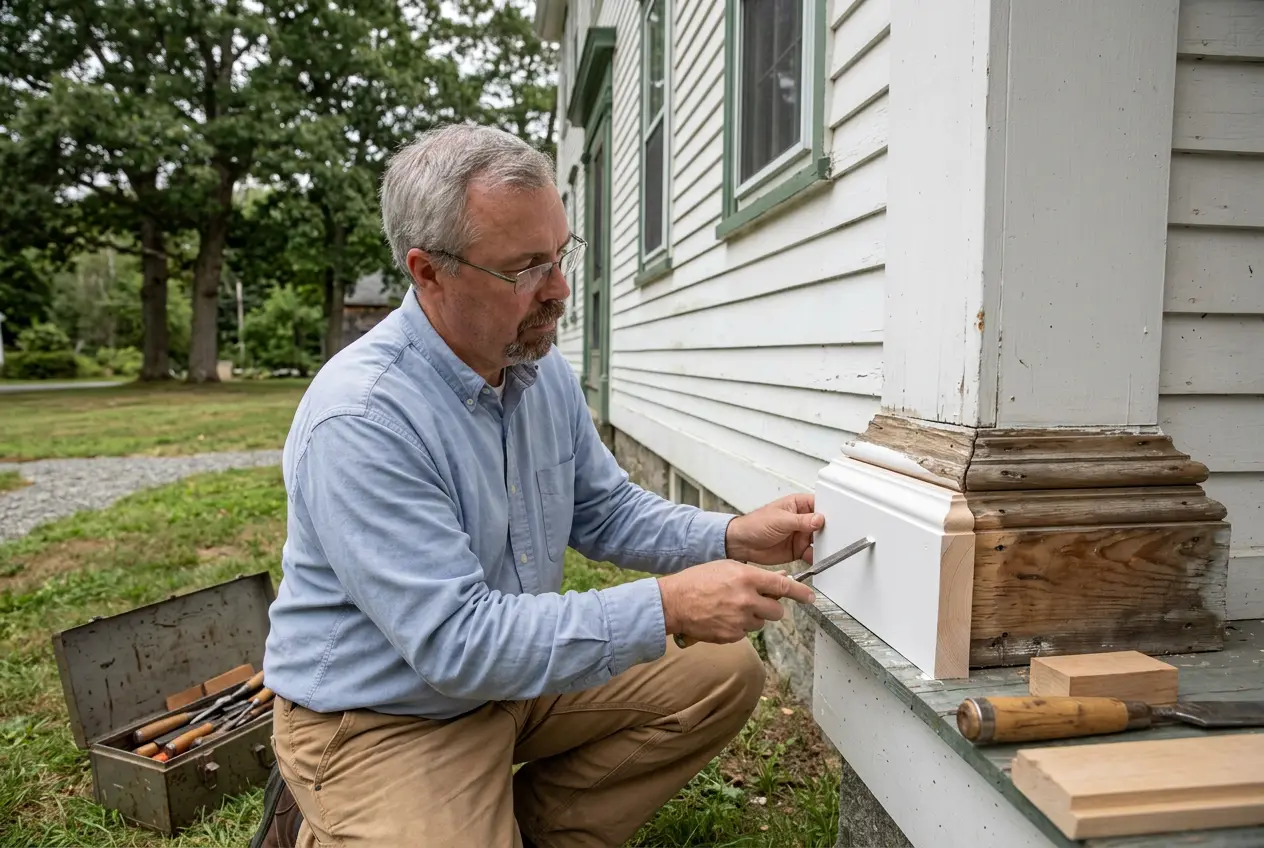
The bottoms of door frames and brick mold, window sills, porch column bases, stair treads, railing posts, and trim near gutters and rooflines are the usual starting points on Boise homes. North facing walls and spots shaded by trees dry slowly and deserve a closer look.
What Each Finding Means
Weathered or surface damaged wood can usually be sanded, filled, primed, and painted. Small areas of shallow rot can sometimes be consolidated and repaired in place. Deeper rot means cutting the damaged section out and replacing it with a matched piece. When rot is found, the next step is always finding where the water is coming from.
If you are unsure what you are looking at, John can take a look, explain what he sees, and recommend the least invasive repair that will last.